
Understanding what is Orange Money starts with recognizing the fundamental challenge millions of people face globally: limited access to traditional banking services. Orange Money represents a mobile financial service that enables users to send, receive, and manage money using their mobile phones, regardless of whether they have a traditional bank account. This service has become a cornerstone of financial inclusion, particularly across Africa and the Middle East, where it serves over 40 million customers across 17 countries. For entrepreneurs and side hustlers exploring international opportunities or digital payment systems, understanding what is Orange Money offers valuable insights into the evolving landscape of mobile financial services.
Understanding the Orange Money Platform
What is Orange Money in practical terms? It's a mobile money service operated by Orange S.A., one of the world's leading telecommunications companies. The platform transforms ordinary mobile phones into financial tools, enabling users to perform transactions that traditionally required bank accounts or physical cash.
The service operates through a simple interface accessible on both smartphones and basic feature phones. Users register for an account, link it to their mobile number, and can immediately begin conducting financial transactions. This accessibility has made Orange Money particularly valuable in regions where smartphone penetration remains limited but mobile phone usage is widespread.
Core Services and Functionality
Orange Money provides a comprehensive suite of financial services designed to meet everyday needs:
- Money transfers between Orange Money users and to other mobile money platforms
- Bill payments for utilities, services, and merchants
- Airtime purchases for mobile phone credit
- Cash deposits and withdrawals through authorized agents
- Salary disbursements for businesses and organizations
- International remittances in select markets
- Digital credit services through partnerships with fintech companies
The platform's versatility extends beyond simple peer-to-peer transfers. Businesses use Orange Money for payroll distribution, merchants accept it as payment, and individuals rely on it for routine financial management.
The Evolution and Growth of Orange Money
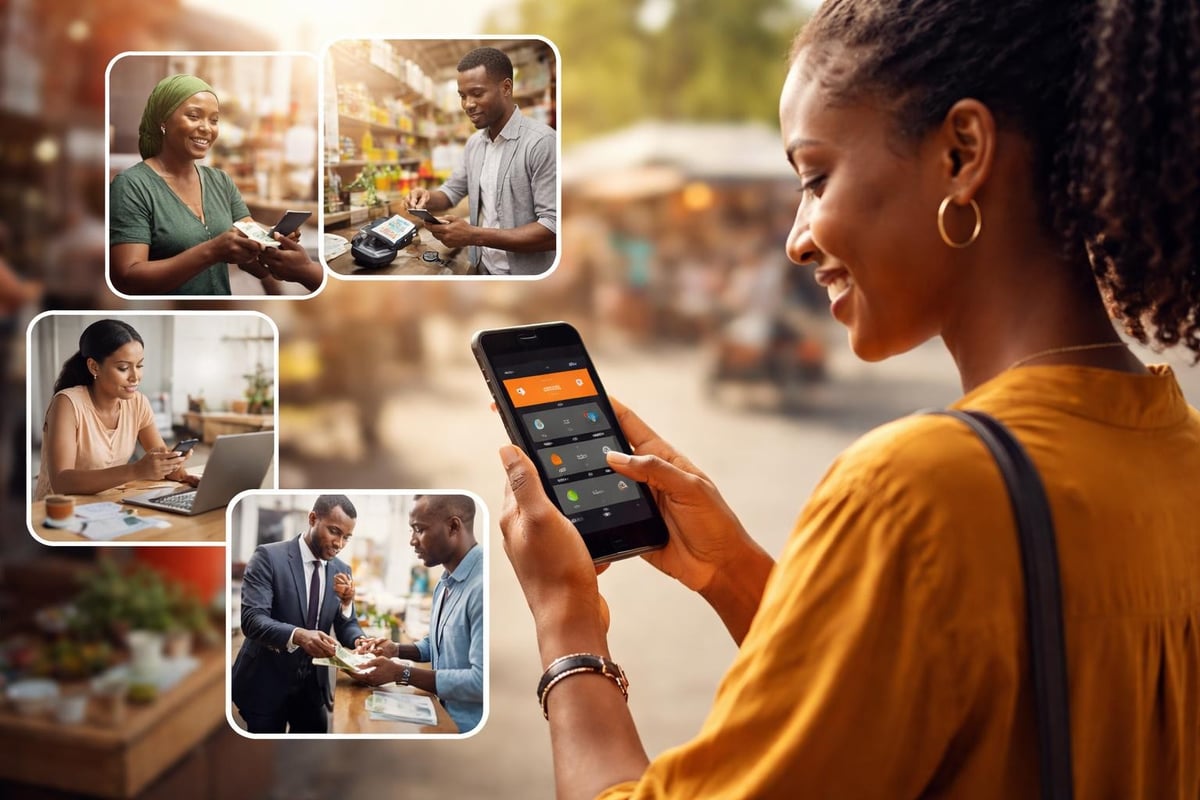
Orange Money celebrates a decade of financial innovation, marking significant milestones in its expansion across emerging markets. The service launched with a vision to provide financial access to underserved populations, recognizing that millions of people owned mobile phones but lacked access to traditional banking infrastructure.
The growth trajectory has been remarkable. From its initial launch in select African markets, Orange Money has expanded to serve diverse populations across multiple continents. The service processes billions of dollars in transactions annually, demonstrating the massive demand for accessible financial services.
Geographic Expansion and Market Presence
Orange Money operates across a strategic network of countries, with particularly strong presence in West and Central Africa. The service has established operations in:
| Region | Key Markets | User Base Characteristics |
|---|---|---|
| West Africa | Senegal, Mali, Ivory Coast, Burkina Faso | High adoption among urban and rural populations |
| Central Africa | Cameroon, Democratic Republic of Congo | Growing merchant acceptance and business usage |
| Middle East | Jordan, Morocco | Integration with traditional banking systems |
| North Africa | Egypt, Tunisia | Hybrid digital-traditional payment ecosystems |
The strategic partnership between Orange Money Group and Visa represents a significant step toward expanding digital payment capabilities. This collaboration aims to accelerate online payments and enhance financial services across Africa and the Middle East, bridging mobile money with global payment networks.
How Orange Money Differs from Traditional Banking
When examining what is Orange Money compared to conventional financial services, several distinguishing characteristics emerge. The service operates on fundamentally different infrastructure and serves different customer needs than traditional banks.
Accessibility advantages define Orange Money's competitive position:
- No minimum balance requirements that exclude low-income users
- Immediate account activation without lengthy documentation processes
- Agent networks that extend far beyond bank branch locations
- Simple feature phone compatibility eliminating smartphone requirements
- Lower transaction fees compared to traditional banking services
Traditional banks require extensive documentation, credit histories, and minimum balances. Orange Money removes these barriers, allowing anyone with a mobile phone to participate in the formal financial ecosystem. This democratization of finance has profound implications for economic development and individual opportunity.
Agent Network Infrastructure
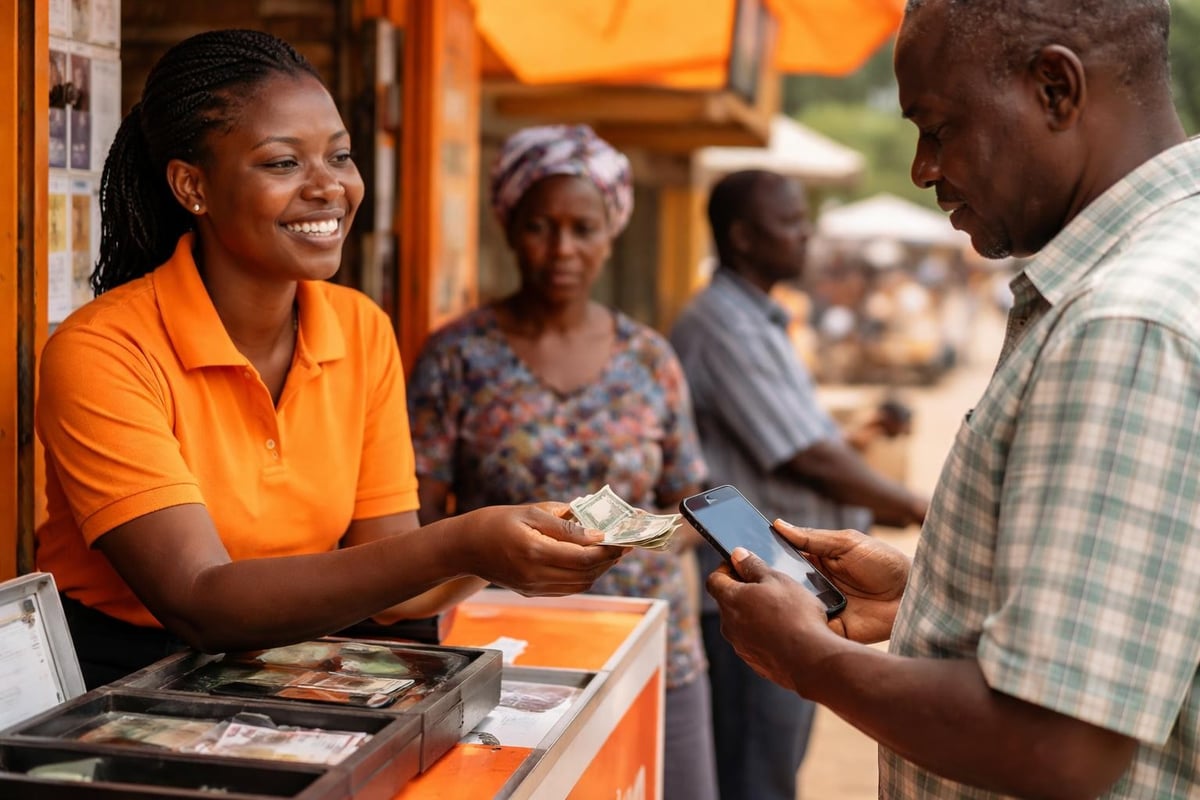
The backbone of Orange Money's success lies in its extensive agent network. These authorized representatives, often small shop owners or kiosk operators, serve as the physical touchpoints where users deposit or withdraw cash. The agent model creates economic opportunities while simultaneously extending Orange Money's reach into communities where formal banking infrastructure doesn't exist.
Agents earn commissions on transactions, creating a sustainable business model that incentivizes service quality and availability. This distributed network approach proves more cost-effective than establishing traditional bank branches while providing greater geographic coverage.
Technology and Security Framework
Understanding what is Orange Money requires appreciating the sophisticated technology underlying its seemingly simple interface. The platform employs multiple security layers to protect user funds and personal information.
Security measures include:
- PIN-based authentication for all transactions
- Encrypted data transmission protecting financial information
- Transaction limits preventing unauthorized large transfers
- Real-time fraud monitoring systems
- Multi-factor verification for sensitive operations
- Regular security audits and compliance reviews
The collaboration between Orange Money Burkina Faso and Comviva demonstrates ongoing investment in technological advancement. These upgrades focus on faster transaction processing, enhanced security features, and improved user experiences.
Mobile Application and USSD Interface
Orange Money serves users through two primary interfaces. The mobile application provides a rich, feature-complete experience for smartphone users, with intuitive navigation and comprehensive transaction histories. For users with basic phones, USSD codes offer access to all core services through simple menu-driven interfaces.
This dual-interface approach ensures no user gets left behind due to device limitations. The USSD system works on virtually any mobile phone, requiring only network connectivity rather than internet access or specialized hardware.
Business Applications and Entrepreneurial Opportunities
What is Orange Money's relevance for entrepreneurs and side hustlers? The platform creates multiple revenue opportunities and business applications worth exploring.
Direct business opportunities:
- Operating as an authorized Orange Money agent
- Providing money transfer services for migrants and expats
- Accepting Orange Money payments for products or services
- Facilitating cross-border transactions for international clients
- Offering financial literacy training in Orange Money usage
Merchants who integrate Orange Money payment acceptance often see increased sales, particularly from customers who prefer mobile payments over cash. The lower transaction costs compared to credit card processing make it economically viable even for small-ticket purchases.
Integration with E-commerce and Digital Services
The partnership between Orange Middle East and Africa and Mastercard aims to digitize payments for millions across Africa by 2025. This collaboration enables Orange Money users to make international online purchases and access global e-commerce platforms.
For digital entrepreneurs, this integration means access to a massive customer base that previously couldn't participate in online transactions. Content creators, course developers, and service providers can accept payments from Orange Money users, expanding their potential market significantly.
Financial Inclusion Impact
The broader significance of what is Orange Money extends beyond individual transactions to systemic economic impact. Mobile money services like Orange Money contribute to financial inclusion by bringing previously unbanked populations into the formal economy.
Measurable impacts include:
- Increased savings rates among low-income populations
- Enhanced business capitalization through easier access to credit
- Reduced transaction costs for remittances and bill payments
- Improved financial record-keeping enabling credit history development
- Greater economic resilience through accessible emergency funds
Research consistently shows that access to mobile financial services correlates with improved economic outcomes. Households using services like Orange Money demonstrate better ability to weather financial shocks, invest in education, and grow small businesses.
| Benefit Category | Traditional Banking | Orange Money |
|---|---|---|
| Account Opening Time | Days to weeks | Minutes |
| Minimum Documentation | Extensive | Minimal (ID and phone) |
| Geographic Availability | Limited to branches | Nationwide agent network |
| Technology Requirements | Often requires internet | Works on basic phones |
| Average Transaction Cost | Higher fees | Lower fees |
Strategic Partnerships and Future Development
According to Orange’s comprehensive overview on Wikipedia, the service continues expanding through strategic collaborations. These partnerships enhance functionality, extend geographic reach, and integrate Orange Money with broader financial ecosystems.
The collaboration between Orange Money Group and fintech JUMO focuses on expanding credit services in Africa. This partnership addresses a critical gap in financial services: access to affordable credit for individuals and small businesses without traditional credit histories.
Regional Adaptations and Local Partnerships
Orange Money doesn't operate identically across all markets. Instead, the service adapts to local regulations, partnerships, and customer needs. The partnership between Orange Maroc and Damane Cash exemplifies this localized approach, expanding financial services specifically tailored to Moroccan market conditions.
Regional adaptations ensure compliance with local financial regulations while maximizing relevance to local customer needs. This flexibility has proven essential to Orange Money's sustained growth and customer satisfaction across diverse markets.

Practical Considerations for Users
For individuals considering what is Orange Money's practical value, several factors deserve consideration. The service works best for specific use cases and user profiles.
Ideal use scenarios:
- Regular bill payments and utility transactions
- Sending money to family members in other locations
- Receiving salary or business payments without bank accounts
- Making merchant purchases at participating retailers
- Accessing microloans and credit services
- Managing finances in areas with limited banking infrastructure
Understanding transaction limits, fee structures, and service availability in your specific location ensures optimal use. While Orange Money offers extensive functionality, it complements rather than completely replaces traditional banking for users with complex financial needs.
Cost Structure and Fee Transparency
Transaction fees vary by country, transaction type, and amount. Generally, Orange Money maintains competitive pricing compared to traditional banking services and other money transfer methods. Common fee categories include:
- Transfer fees (typically percentage-based with minimums)
- Cash withdrawal charges at agent locations
- Bill payment processing fees
- Currency conversion costs for international transactions
- Monthly maintenance fees (where applicable)
Fee transparency has improved significantly over Orange Money's evolution, with clear pricing displayed before transaction confirmation. Users can review costs and make informed decisions about whether specific transactions provide good value.
Regulatory Environment and Compliance
What is Orange Money's relationship with financial regulators? The service operates under stringent oversight in each market, holding appropriate licenses and meeting local financial service requirements.
Regulatory compliance includes:
- Anti-money laundering (AML) protocols
- Know Your Customer (KYC) verification requirements
- Transaction monitoring and reporting
- Consumer protection standards
- Data privacy regulations
- Financial service licensing requirements
These regulatory frameworks protect users while ensuring Orange Money operates within established legal boundaries. The compliance infrastructure, while adding operational complexity, ultimately strengthens user trust and service stability.
Challenges and Limitations
Understanding what is Orange Money requires acknowledging current limitations and ongoing challenges. No financial service is perfect, and Orange Money faces several constraints.
Current limitations include:
- Geographic restrictions limiting service to specific countries
- Transaction limits that may not accommodate large business needs
- Dependency on mobile network coverage and reliability
- Agent liquidity challenges in remote areas
- Interoperability issues with competing mobile money platforms
- Currency conversion limitations for international transactions
These challenges represent opportunities for continued improvement rather than fundamental flaws. Orange Money actively addresses many limitations through technological upgrades, expanded partnerships, and infrastructure investments.
Competitive Landscape and Market Position
Orange Money operates in a competitive mobile money ecosystem alongside services like M-Pesa, MTN Mobile Money, and various other regional platforms. What is Orange Money's competitive position within this landscape?
Competitive advantages:
- Strong telecommunications infrastructure from parent company Orange
- Extensive geographic footprint across multiple countries
- Strategic partnerships with global financial institutions
- Technological innovation through continuous platform upgrades
- Brand recognition and trust from Orange's established presence
Market position varies by country, with Orange Money holding dominant positions in some markets while competing more intensely in others. The service's integration with Orange's broader telecommunications offerings creates natural synergies and customer convenience.
Understanding what is Orange Money reveals a sophisticated mobile financial service transforming how millions access banking services across Africa and the Middle East. Whether you're exploring international business opportunities, seeking to understand emerging payment technologies, or researching alternative financial systems, Orange Money represents a significant case study in financial innovation and inclusion. At Make Extra Money Academy, we provide the tools, strategies, and expert insights you need to identify and capitalize on emerging opportunities in digital finance and global markets, helping you turn knowledge into profitable action.