

The gaming industry has evolved far beyond entertainment. What once required only time and passion now offers legitimate income opportunities for millions of players worldwide. The reality that games can earn real money has transformed how people view gaming, turning casual hobbies into viable income streams. Whether you're looking to supplement your income or explore new revenue channels, understanding the mechanics behind these opportunities is essential for success in 2026.
The Economic Foundation of Gaming Income
The concept that games can earn real money isn't new, but the mechanisms have become significantly more sophisticated. Virtual economies within games mirror real-world markets, creating genuine value through supply, demand, and scarcity. Players who understand these economic principles position themselves to capitalize on opportunities others overlook.
Understanding Virtual Currency Systems
Most money-earning games operate on virtual currency systems that convert to actual cash. These systems function through various models:
- Direct conversion platforms where in-game currency exchanges for USD or other fiat currencies
- Cryptocurrency-based rewards that players can trade on external exchanges
- Prize pools distributed to competitive players based on performance
- Marketplace transactions where players sell digital assets to other users
The economic activities within virtual environments have created entire industries around professional gaming. Some players treat these activities as full-time careers, generating sustainable income through strategic gameplay and market understanding.

Blockchain Gaming and Play-to-Earn Models
Blockchain technology has revolutionized how games can earn real money. These platforms distribute ownership and rewards directly to players through verifiable digital assets. Unlike traditional gaming where publishers control all assets, blockchain games give players true ownership of their earnings.
Cryptocurrency-Based Gaming Platforms
The play-to-earn model represents one of the most significant innovations in gaming monetization. Games like Axie Infinity pioneered this approach, allowing players to earn cryptocurrency through battles, breeding creatures, and trading digital assets. The model works because player actions create genuine economic value within the ecosystem.
Key characteristics of successful blockchain games:
- Transparent token economics with clear earning mechanisms
- Active marketplaces supporting asset liquidity
- Sustainable reward systems that balance inflation
- Community governance allowing player input on development
- Multiple income streams beyond basic gameplay
The success of these platforms demonstrates that games can earn real money when economic systems are properly designed. However, players must approach these opportunities with realistic expectations. Market volatility, initial investment requirements, and time commitments all factor into actual earnings.
| Game Type | Initial Investment | Earning Potential | Time to Profit |
|---|---|---|---|
| NFT-based games | $100-$500 | $50-$300/month | 2-4 months |
| Free blockchain games | $0 | $20-$100/month | 1-2 months |
| Competitive esports | $0-$50 | $0-$5,000+ | Variable |
| Skill-based platforms | $0-$25 | $50-$500/month | 1-3 weeks |
Skill-Based Competition Platforms
Traditional skill-based gaming offers another avenue where games can earn real money without blockchain complexity. These platforms reward players for outperforming opponents in familiar titles ranging from puzzle games to strategy competitions.
Tournament and Head-to-Head Systems
Competitive gaming platforms create prize pools from entry fees, sponsorships, or platform subsidies. Players compete in tournaments or one-on-one matches, with winners claiming cash prizes. The variety of games that pay real money continues expanding as platforms recognize player demand for monetization.
Success in skill-based competition requires:
- Mastering specific game mechanics through dedicated practice
- Understanding opponent psychology to predict moves and counter strategies
- Managing bankroll effectively to sustain participation through losing streaks
- Selecting appropriate competition levels matching your skill tier
- Tracking performance metrics to identify improvement areas
Players who approach these platforms strategically often discover that games can earn real money more consistently than luck-based alternatives. The skill element means dedicated players improve earnings over time as their abilities develop.
Mobile Gaming Rewards and Loyalty Programs
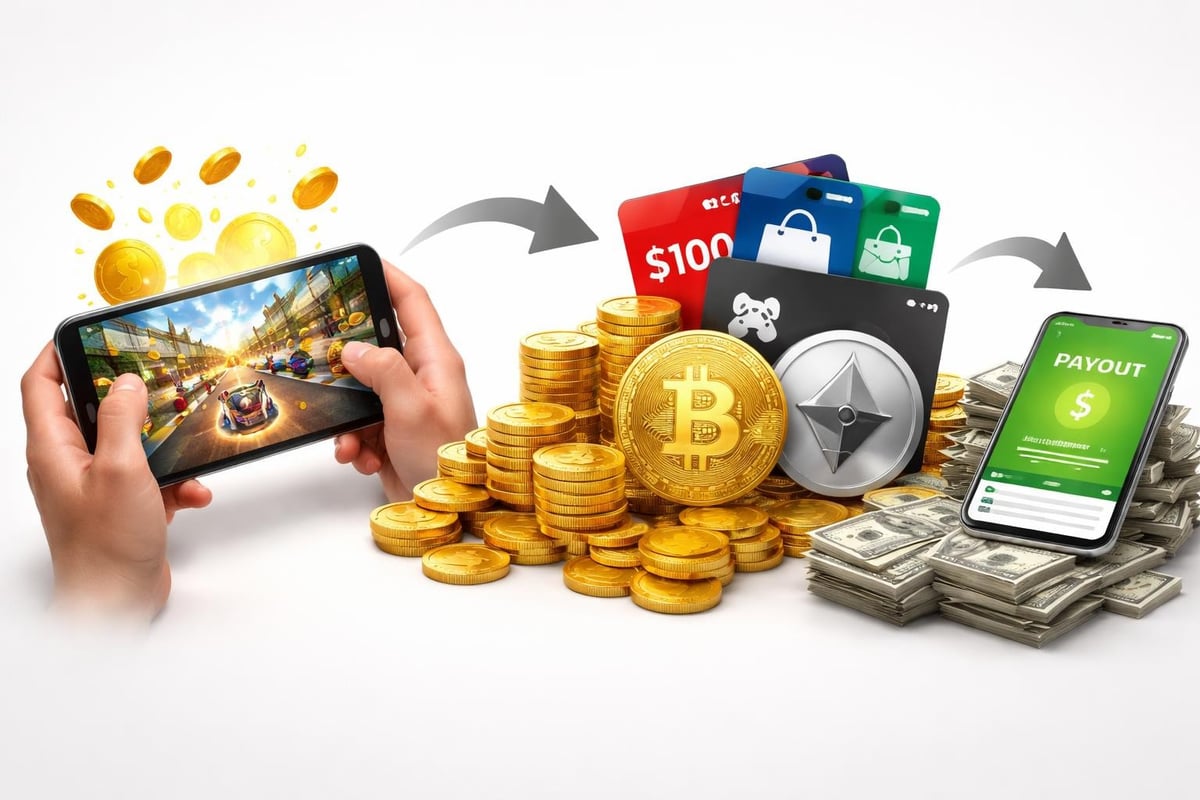
The mobile gaming sector has introduced innovative ways that games can earn real money through rewards programs and loyalty systems. These typically require less intense competition while still offering tangible value.
Achievement-Based Compensation
Recent developments like Google Play’s reward system for gaming achievements demonstrate how major platforms are integrating real-world value into gaming accomplishments. Players earn points redeemable for Play Store credit, effectively monetizing their gaming time.
These systems typically offer:
- Daily login bonuses accumulating over time
- Achievement-based rewards for completing specific challenges
- Referral bonuses for bringing new players to platforms
- Tiered loyalty programs with escalating benefits
- Survey and offer completion opportunities
While individual payouts tend to be smaller than competitive gaming, the accessibility makes these options attractive for casual players. The low entry barrier means anyone can start earning immediately without specialized skills or significant time investment.
Content Creation and Streaming Revenue
Gaming content creation represents another dimension where games can earn real money. Platforms like Twitch, YouTube, and TikTok enable gamers to monetize their personalities and expertise through audience building.
Monetization Through Audience Engagement
Content creators earn through multiple revenue streams simultaneously:
- Platform ad revenue based on view counts and engagement metrics
- Subscription programs offering exclusive content to paying members
- Sponsorship deals promoting gaming products and services
- Donation systems where viewers support creators directly
- Affiliate commissions from recommended products and services
The evolving landscape of gaming monetization shows how professional opportunities continue expanding. Success requires consistent content production, audience engagement, and personal brand development beyond simply playing games well.
| Platform | Primary Revenue | Time to Monetize | Avg. Monthly (Starting) |
|---|---|---|---|
| Twitch | Subscriptions/Ads | 3-6 months | $100-$500 |
| YouTube Gaming | Ad revenue | 6-12 months | $50-$300 |
| TikTok | Creator fund | 1-3 months | $20-$150 |
| Facebook Gaming | Stars/Ads | 2-4 months | $75-$400 |
Virtual Real Estate and Digital Asset Trading
Sophisticated players have discovered that games can earn real money through virtual real estate investment and digital asset speculation. Games like Entropia Universe have demonstrated this model's viability for over two decades.
Investment Strategies in Virtual Worlds
Virtual property operates similarly to physical real estate. Players purchase land, develop it to increase value, and generate income through rentals or eventual sales. Successful virtual investors:
- Research market trends identifying undervalued assets
- Develop properties to increase utility and attractiveness
- Create passive income streams through rental agreements
- Time market cycles for optimal buying and selling
- Diversify across multiple games and asset types
The risk-reward profile mirrors traditional investing. Significant returns are possible but require capital, market knowledge, and patience. Players must evaluate whether virtual asset investment aligns with their financial goals and risk tolerance.

User-Generated Content Monetization
Creative players find that games can earn real money through content creation within game ecosystems. Platforms increasingly share revenue with players who build maps, items, and experiences that enhance the gaming environment.
Creator Economy Integration
Fortnite’s creator monetization program exemplifies how major titles are empowering player entrepreneurs. Creators earn money from items sold on their custom islands, directly participating in the game's economy. Roblox has pioneered this model, with thousands of developers earning substantial income from their creations.
Successful creator monetization requires:
- Understanding platform tools and creation interfaces
- Identifying unmet player needs and desires
- Designing engaging experiences that retain players
- Marketing creations to reach target audiences
- Iterating based on player feedback and analytics
This approach suits players with design, programming, or artistic skills who want to leverage creativity rather than pure gameplay ability. The scalability means successful creations can generate passive income long after initial development.
Testing and Review Opportunities
Game testing and review services offer another avenue where games can earn real money. Developers pay players to test beta versions, provide feedback, and identify bugs before public release.
Professional Testing Platforms
Legitimate testing opportunities come through established platforms connecting developers with qualified testers. Compensation varies based on project complexity, testing duration, and tester experience level. Players earn by:
- Participating in closed beta tests with fixed compensation
- Reporting bugs through bounty programs
- Completing surveys about gameplay experience
- Recording gameplay sessions for developer analysis
- Writing detailed reviews for game development teams
While testing won't replace full-time income, it provides consistent supplemental earnings for dedicated participants. Building a reputation for thorough, professional feedback leads to more frequent and higher-paying opportunities.
Maximizing Gaming Income Potential
Understanding that games can earn real money is only the starting point. Maximizing that potential requires strategic thinking, realistic planning, and consistent execution. The comprehensive guides on lucrative gaming opportunities provide frameworks for evaluating which approaches best suit individual circumstances.
Strategic Income Optimization
Successful gaming entrepreneurs typically combine multiple revenue streams rather than relying on a single method. This diversification provides stability when individual opportunities fluctuate. Consider these optimization strategies:
- Time allocation analysis to identify highest-earning activities per hour
- Skill development focus on games offering best return on improvement
- Market timing to capitalize on new game launches and trend cycles
- Network building with other earning gamers for information sharing
- Tax preparation to properly document and report gaming income
The resources available at Make Extra Money Academy help players develop comprehensive strategies aligned with their goals, skills, and available time.
Risk Management and Sustainability
While games can earn real money, sustainable success requires careful risk management. Not all opportunities deliver promised returns, and market conditions change rapidly in the gaming industry.
Protecting Your Investment
Players should approach gaming income with the same diligence applied to any business venture:
Financial safeguards:
- Never invest more than you can afford to lose
- Separate gaming income from personal finances
- Research platforms thoroughly before depositing funds
- Understand withdrawal terms and potential fees
- Track all transactions for tax reporting
Time management:
- Set realistic hourly earning targets
- Monitor actual returns versus time invested
- Avoid platforms requiring unsustainable time commitments
- Balance gaming income activities with other opportunities
- Recognize when diminishing returns signal exit points
The updated perspective on gaming opportunities in 2025 emphasizes sustainability over short-term gains. Markets evolve, games lose popularity, and economic models change. Adaptability ensures long-term success regardless of individual platform longevity.
Platform Selection Criteria
Choosing which platforms to pursue determines success when games can earn real money. Not all opportunities suit all players, and matching personal strengths to platform requirements maximizes earning potential.
Evaluation Framework
Assess potential platforms using these criteria:
| Criteria | Questions to Ask | Red Flags |
|---|---|---|
| Legitimacy | Is the company established? Are payments verified? | No payment proof, vague terms |
| Economics | Are earnings realistic and sustainable? | Guaranteed high returns, pyramid structure |
| Requirements | Do I have necessary skills and time? | Excessive time demands, high entry costs |
| Liquidity | How easily can I withdraw earnings? | Long withdrawal delays, high minimum thresholds |
| Community | Are other players earning successfully? | Mostly complaints, no success stories |
The comprehensive analysis of cash-earning games provides detailed platform comparisons helping players make informed decisions. Due diligence before committing time or money prevents wasted effort on non-viable opportunities.
Building Long-Term Gaming Income
Transitioning from occasional earnings to consistent income requires treating gaming as a business. Professional approach, continuous learning, and strategic planning separate hobbyists from successful gaming entrepreneurs who recognize that games can earn real money sustainably.
Professional Development Path
Players serious about gaming income should:
- Specialize in specific platforms rather than spreading too thin
- Track detailed metrics on earnings, time invested, and efficiency
- Connect with successful players to learn advanced strategies
- Stay informed on industry changes affecting monetization
- Reinvest earnings strategically into tools and opportunities
- Develop complementary skills like marketing or content creation
- Plan for market shifts with diversified income approaches
The professional mindset transforms casual earning into legitimate business operations. While not everyone will achieve full-time gaming income, systematic approaches consistently outperform random participation.
The proven reality that games can earn real money creates genuine opportunities for motivated individuals willing to approach gaming strategically. From blockchain platforms to skill-based competition, content creation to virtual investing, multiple paths exist for monetizing gaming abilities and interests. Success requires matching your strengths to appropriate opportunities, managing risks carefully, and maintaining realistic expectations about earning potential. Whether you're looking to supplement existing income or explore gaming as a primary revenue source, Make Extra Money Academy provides the comprehensive resources, expert guidance, and proven strategies to help you turn gaming passion into profitable reality.