

The gaming industry has evolved far beyond simple entertainment. What once required landing a job at a major studio or winning competitive tournaments now encompasses dozens of accessible income opportunities. Whether you're a casual player, content creator, or aspiring developer, games can earn money through multiple proven channels that fit various skill levels and time commitments. Understanding these opportunities and implementing the right strategies can transform gaming from an expensive hobby into a legitimate revenue stream.
The Streaming and Content Creation Economy
Platforms like Twitch, YouTube Gaming, and Facebook Gaming have created unprecedented opportunities for gamers to monetize their gameplay. Successful streamers generate income through subscriptions, donations, sponsorships, and ad revenue. The barrier to entry remains remarkably low-requiring only basic equipment and consistent content production.
Building a Streaming Revenue Model
Creating sustainable streaming income requires strategic planning and audience development. Most successful streamers diversify their revenue across multiple sources rather than relying solely on platform payments.
Primary revenue streams for streamers include:
- Platform subscriptions (Twitch, YouTube memberships)
- Viewer donations and tips
- Sponsorship deals with gaming brands
- Affiliate marketing commissions
- Ad revenue from video content
Small streamers often start earning within their first few months through affiliate programs. Once channels reach partner status, monthly earnings can range from hundreds to thousands of dollars depending on audience size and engagement rates.

Content Creation Beyond Live Streaming
Video content creation offers another powerful avenue where games can earn money. YouTube channels focused on gaming tutorials, reviews, speedruns, and entertaining gameplay compilations attract millions of viewers. According to insights from MakeUseOf’s guide on making money playing video games, hosting gaming podcasts or creating YouTube content represents viable monetization strategies.
Successful gaming content creators often develop niche specializations. Rather than competing with established channels covering every popular game, they focus on specific genres, games, or content types where they can establish authority.
Competitive Gaming and Esports
Professional esports has matured into a billion-dollar industry with structured leagues, team salaries, and substantial prize pools. While reaching the professional level requires exceptional skill, semi-professional and amateur competitions offer accessible entry points.
Tournament Earnings and Team Contracts
Major esports titles like League of Legends, Dota 2, Counter-Strike, and Valorant host regular tournaments with prize pools ranging from thousands to millions of dollars. Professional players earn salaries from team organizations plus tournament winnings and sponsorship deals.
| Competition Level | Typical Earnings | Requirements |
|---|---|---|
| Amateur Local | $100-$1,000 | Regional ranking |
| Semi-Professional | $1,000-$10,000 | Top 500 ranking |
| Professional Team | $50,000-$500,000+ | Top 100 global |
| Elite Championship | $500,000-$3,000,000+ | Top 10 global |
Even players who never reach professional status can earn through smaller tournaments, online competitions, and coaching services. Platforms like Google Play’s Free Fire League demonstrate how platforms are creating competitive events with financial rewards for skilled players.
Gaming Coaching and Consulting
Skilled players monetize their expertise by offering coaching services. Platforms like Gamer Sensei, Fiverr, and ProGuides connect coaches with students willing to pay $20-$100 per hour for personalized training. This represents a practical way games can earn money without requiring celebrity-level fame or professional tournament success.
Game Development and User-Generated Content
Creating games or in-game content has become increasingly accessible through platforms that democratize development and provide built-in monetization systems.
Platform-Based Game Creation
Roblox stands as the premier example of user-generated content monetization. Developers create games using Roblox Studio and earn Robux (the platform currency) through in-game purchases, which converts to real money. Teenage developers have become millionaires by creating popular experiences on the platform, demonstrating the substantial earning potential.
Key platforms for game creation income:
- Roblox-Create games and experiences
- Fortnite Creative-Build custom maps and modes
- Core Games-Develop multiplayer experiences
- Dreams (PlayStation)-Design and publish games
These platforms handle distribution, payments, and technical infrastructure, allowing creators to focus on game design rather than business operations.
Selling In-Game Content and Assets
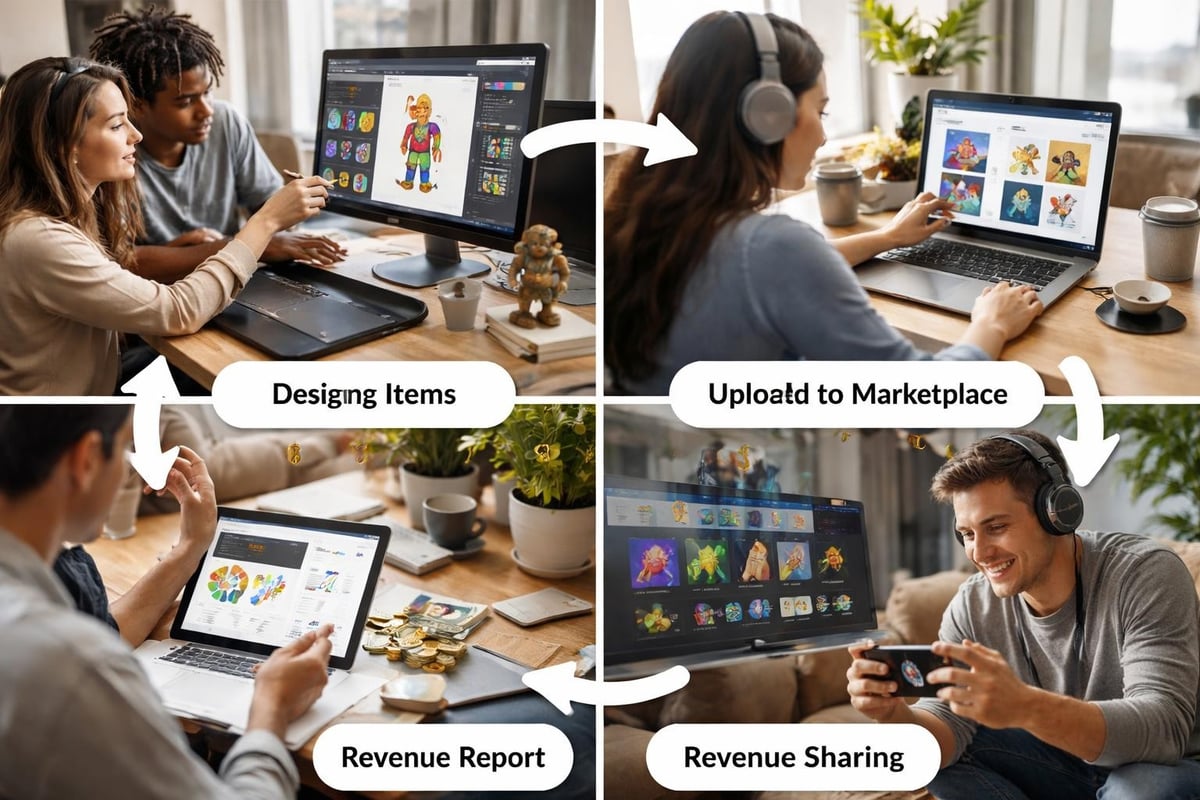
Major gaming platforms now enable creators to sell custom content directly to players. The Sims 4’s new Maker Program allows content creators to sell their work through an official marketplace, creating legitimate income opportunities for modders and designers.
Similarly, Fortnite plans to enable creators to sell their own items and advertise them within the game, opening new revenue channels for talented designers. This shift toward creator economies means games can earn money for artists, designers, and developers at all experience levels.
Testing, Reviewing, and Beta Programs
Game companies actively seek player feedback and pay for testing services. While not as lucrative as other methods, game testing provides steady supplemental income with flexible hours.
Professional Game Testing
Quality assurance testers work for development studios, publishers, or third-party testing companies. Entry-level positions typically pay $15-$25 per hour, with experienced testers earning $50,000-$70,000 annually. These positions require attention to detail, systematic testing approaches, and clear bug reporting.
Testing work includes:
- Identifying bugs and glitches
- Verifying feature functionality
- Assessing user experience
- Checking compatibility across devices
- Testing multiplayer systems
User Testing Platforms
Platforms like PlaytestCloud, UserTesting, and BetaTesting.com connect casual gamers with developers seeking feedback. Participants earn $5-$50 per test session, with sessions typically lasting 15-60 minutes. This represents an accessible entry point where games can earn money without requiring professional experience.
Virtual Economy Trading and NFTs
In-game economies have created opportunities for players to profit through item trading, account building, and virtual asset management.
Item Trading and Marketplaces
Games with robust trading systems enable players to buy low and sell high, profiting from market knowledge and timing. CS:GO skins, Dota 2 items, and Path of Exile currencies represent established trading markets where experienced traders generate consistent profits.
Successful trading strategies include:
- Monitoring market trends and seasonal patterns
- Identifying undervalued items
- Building reputation as a trusted trader
- Understanding game updates that affect values
- Diversifying portfolios across multiple games
Play-to-Earn and Blockchain Games
While controversial and volatile, blockchain-based games promise ownership of in-game assets that players can sell for real money. Games like Axie Infinity, Gods Unchained, and The Sandbox have created ecosystems where games can earn money through gameplay, tournaments, and asset appreciation.
These games require careful research and risk assessment. The market remains speculative, and many projects fail or lose value rapidly. Players should invest only disposable income and thoroughly understand the economic models before participating.
Leveraging Gaming Skills in Adjacent Industries
Gaming expertise translates into various related career opportunities that don't require playing games directly but rely on gaming knowledge and community understanding.
Community Management and Moderation
Gaming companies, esports organizations, and content creators hire community managers to moderate forums, Discord servers, and social media channels. These positions pay $40,000-$70,000 annually for full-time roles, with part-time and freelance opportunities available.
Community managers handle:
- Moderating discussions and enforcing rules
- Organizing events and tournaments
- Creating engagement strategies
- Gathering player feedback
- Supporting customer service teams
Gaming Journalism and Writing
Publications, websites, and marketing agencies seek writers with gaming expertise. Freelance gaming writers earn $50-$500 per article depending on publication, length, and expertise. Full-time gaming journalists at major publications earn $45,000-$80,000 annually.

The University of Cincinnati’s comprehensive guide explores various career paths in gaming, including content creation, game design, and esports opportunities, providing valuable insights into monetization strategies.
Building Multiple Income Streams
The most successful individuals who generate income through gaming rarely rely on a single revenue source. Diversification creates stability and maximizes earning potential across different platforms and opportunities.
Creating a Sustainable Gaming Income Portfolio
Smart gaming entrepreneurs combine complementary income streams that support and amplify each other. A content creator might stream on Twitch, upload highlights to YouTube, offer coaching services, and participate in tournaments.
| Income Stream | Time Investment | Revenue Potential | Stability |
|---|---|---|---|
| Streaming | High | Medium-High | Medium |
| YouTube Videos | Medium-High | Medium-High | High |
| Tournament Play | Medium | Low-High | Low |
| Coaching | Low-Medium | Medium | High |
| Content Creation | High | Medium | Medium-High |
| Game Development | Very High | Low-Very High | Low-Medium |
This diversification ensures that algorithm changes, platform policy updates, or shifting gaming trends don't eliminate all income simultaneously.
Investing in Equipment and Skills
Generating consistent income from gaming requires strategic investment in equipment, software, and skill development. Professional-quality microphones, cameras, and editing software improve content quality and audience perception.
Equally important is investing time in learning business skills. Understanding analytics, marketing, audience psychology, and brand building separates successful gaming entrepreneurs from hobbyists who never generate significant income.
Essential skill areas for gaming income:
- Content creation and video editing
- Social media marketing
- Community engagement
- Personal branding
- Basic business and tax knowledge
- Networking within gaming communities
Realistic Expectations and Timeline
Understanding the realistic timeline and effort required helps prevent discouragement and supports sustainable strategy development. While stories of overnight success attract attention, most successful gaming income earners spend months or years building their audience and revenue.
First-Year Income Benchmarks
Most people exploring how games can earn money should expect modest returns initially. The first 3-6 months typically generate minimal income as channels grow and strategies refine.
Typical first-year progression:
- Months 1-3: $0-$100 total
- Months 4-6: $100-$500 total
- Months 7-9: $500-$2,000 total
- Months 10-12: $1,000-$5,000 total
These figures assume consistent effort, quality content, and strategic audience building. Some individuals exceed these benchmarks significantly, while others progress more slowly.
Scaling to Full-Time Income
Transitioning from supplemental income to full-time gaming revenue requires reaching critical audience thresholds and establishing multiple revenue streams. Most successful full-time gaming entrepreneurs report 18-36 months from starting seriously to replacing traditional employment income.
The key lies in treating gaming income as a business rather than a hobby. This means tracking metrics, analyzing performance, adjusting strategies based on data, and consistently investing in growth rather than treating any success as passive income.
Tax Considerations and Legal Requirements
Gaming income remains taxable regardless of how it's earned. Understanding tax obligations prevents future problems and enables proper business planning.
Reporting Gaming Income
The IRS requires reporting all income, including donations, prize money, sponsorships, and platform payments. Most platforms issue 1099 forms when earnings exceed $600 annually, but income below this threshold still requires reporting.
Common tax-deductible expenses for gaming income:
- Equipment purchases (computers, consoles, peripherals)
- Software subscriptions
- Internet service (portion used for business)
- Home office space (if applicable)
- Game purchases used for content
- Marketing and advertising costs
Consulting with a tax professional familiar with content creation and online businesses ensures compliance and maximizes deductions. Many gaming entrepreneurs discover they can deduct significant portions of their gaming-related expenses when properly documented.
Business Structure Decisions
As gaming income grows, establishing a formal business structure (LLC, S-Corp) provides liability protection and potential tax advantages. This becomes particularly important when entering sponsorship agreements, hiring contractors, or generating over $50,000 annually.
Professional guidance from accountants and attorneys helps navigate these decisions based on individual circumstances, income levels, and growth projections.
The opportunities where games can earn money have expanded dramatically beyond what most people realize. From streaming and content creation to development and competitive play, multiple proven pathways exist for transforming gaming skills into real income. Success requires strategic planning, consistent effort, and diversified revenue streams, but the potential remains accessible to dedicated individuals willing to treat their gaming activities as a serious business venture. Make Extra Money Academy provides comprehensive resources, step-by-step guides, and expert strategies to help you navigate these opportunities and build sustainable income from gaming or any other side hustle. Visit Make Extra Money Academy to access the tools and training you need to turn your gaming passion into profit.